

I'm Natalie, and I manage the live-in care service at Spire Homecare. I have worked in the live-in department for one year, and I have been in the care industry for two years, with experience caring for family members and elderly friends throughout my adulthood.
Live-in care intrigued me at first, and now I love that no day is the same. It can be challenging at times, but that's what makes it exciting.
What live-in care is
Live-in care enables your loved one to stay in the comfort of their own home and receive the companionship and care they need. Your carer will live with you, enabling you to remain in your usual routine, help you access the community, administer your medications, prepare your meals and keep your home clean and tidy.
What a typical day looks like
This varies depending on the client's needs. A typical day for a live-in carer would be as follows.
Morning routine
The day starts when the client first wakes. Some may like a cup of tea in bed with their medication and enjoy a slow wake up, others wake raring to start their day. This is followed by personal care, then help with getting dressed.
If assistance is required, the client will be assisted to the dining, kitchen or living area ready to have their breakfast. This is a breakfast of the client's choice, from a bowl of cereal to a full fry up. The client is now ready to start their day.
Mid morning
The carer will assist the client to pop out into the community, for a walk, or to a museum, a coffee shop or to meet with friends and family, sometimes to a seated exercise class or to a local club to play cards with friends. The client and carer may go back home for lunch or have lunch out, depending on the activity.
2pm to 4pm
The carer normally takes a break between these times. If the client is able to be left on their own, the carer may go out and run their own errands, or may go and relax in their room. If they are not able to be left, Spire Homecare will provide a carer to sit with the client between these hours.
4pm onwards
This is the evening and night-time routine. Dinner starts to be prepared, then served, and the carer tidies up. If the client wants, the carer will sit at the table and provide companionship during meal times.
After the meal and the tidy up comes an evening wash, medications if required, and help getting into night clothes. If the client wishes, they may want to sit and watch TV for a bit. Once the client is ready to go to bed and requires assistance, the carer will help and wish them a good night.
A typical day for a live-in carer is a 15 hour day with a 2 hour break.
What a live-in carer can help with
A live-in carer can provide personal care, pet care, medication support, meal preparation and tidying up, housework, accessing the community and, above all, companionship.
Who live-in care suits
Live-in care is suited to anyone wanting to stay in their own home. We cater to all care needs and work alongside different outside organisations, such as occupational therapists, adult social care and the community district nursing teams, to ensure you are well looked after at home and all your needs are met.
Why choose live-in care over a care home
Live-in care allows the client to stay at home amongst their own surroundings and their memories. It provides one-to-one care and gives the client the ability to continue to live their own life. The carer is dedicated to that one client, rather than spreading themselves between several clients.
Compared with several short visits a day: although domiciliary care can provide the basics of personal care, medication support and light house duties, it does not provide the companionship many people with health conditions would like. Domiciliary care is restricted to set timings, and it can be difficult to change those timings if something arises. With live-in care, activities can be changed if the client doesn't feel like going out, or the weather is poor, and they will still have the companionship of the carer rather than sitting at home on their own.
The difference it makes
Because the client has someone with them at all times, they have time to mobilise safely and they can go into the community and meet friends. This helps with their general wellbeing as well as their mental health. They don't feel forgotten, or stuck in the same four walls all day, every day. They can remain independent whilst still receiving the care they need for their health problems.
Family members who have been providing the care themselves say they can now breathe and relax, as well as starting to live their lives again. The live-in carer quickly becomes part of the family, which gives reassurance to the family.
What families worry about
Most families worry about having to put their loved one in a care or nursing home, and about them not being in their own home. Families worry this will cause the client to decline.
A lot of people worry about having a stranger living in their home. At first, I build a working relationship with the family and the prospective client. This enables me to find the correct carer for the client, so I can match the personalities of the carer and the client well.
Not many people have heard of live-in care. Most people think care goes from domiciliary care straight to a care or nursing home. That simply isn't true, which is a huge relief to most of our live-in clients.
What it costs
Our live-in care starts from £1,250 a week.
Cost comparisons do depend on the area you live in. In general, live-in care does fall below the cost of a care home. There are ways to receive help with funding towards the care, if it is deemed that the client's care needs require a live-in carer.
How we match and support our carers
All Spire carers have full training and experience in all fields of care. I look at the client's activities, lifestyle and personality, and I match clients with the carer who has similar interests, so a bond and trust forms between carer and client.
Spire Homecare has a very robust recruitment and training programme. When a carer has successfully passed the initial interview, a DBS check and visa checks are completed. Upon successful clearance, the carer is enrolled in our training programme, and once they have passed this and been signed off, they are ready to go into placements. I will then speak with the carer and place them on a few break cover shifts, of one to two weeks, so I can get a feel for how the carer works and they get a feel for how we work too. Once everyone is settled, I will look at placing the carer with their permanent placement.
I speak with most carers every week, and they all know they can contact me at any time if they have any concerns. I keep on top of reading the carer notes and contact the carers if I have any concerns.
When a carer would like a break, they give me four weeks' notice, and I then set to work finding the match to cover the break. Breaks can be anywhere from one week to six weeks, depending on how long the carer has been in the placement.
I speak with the family or the new client every other day in the first couple of weeks, and visit a couple of times in the first few weeks to ensure everyone is happy and settled. I then extend the contact to once every couple of weeks, although both carer and client know they can contact me at any time.
Normally, live-in care can take a couple of days at least to organise. This is to ensure the property has everything needed for both carer, for example a second bedroom, and client, to allow travel time for the carer, and to allow time to write the client's care plan.
For live-in care we can cover anywhere within an hour of any of our offices, which takes in Wiltshire, Dorset, Somerset and Bath. That applies to live-in care only. Our visiting, domiciliary care covers the areas listed on each office page.
Two moments that stayed with me
I had a client who loves cars, particularly green Lamborghinis. He would spend all day watching car shows and supercars. I reached out to a friend of mine who does a lot of charity work with his supercars, and in December 2025 I surprised the client with a visit from my friend in his green Lamborghini, who spent hours with him and took him out for a drive. The client thoroughly enjoyed this day. It brought tears to his eyes, and he said it's a day he will remember forever.

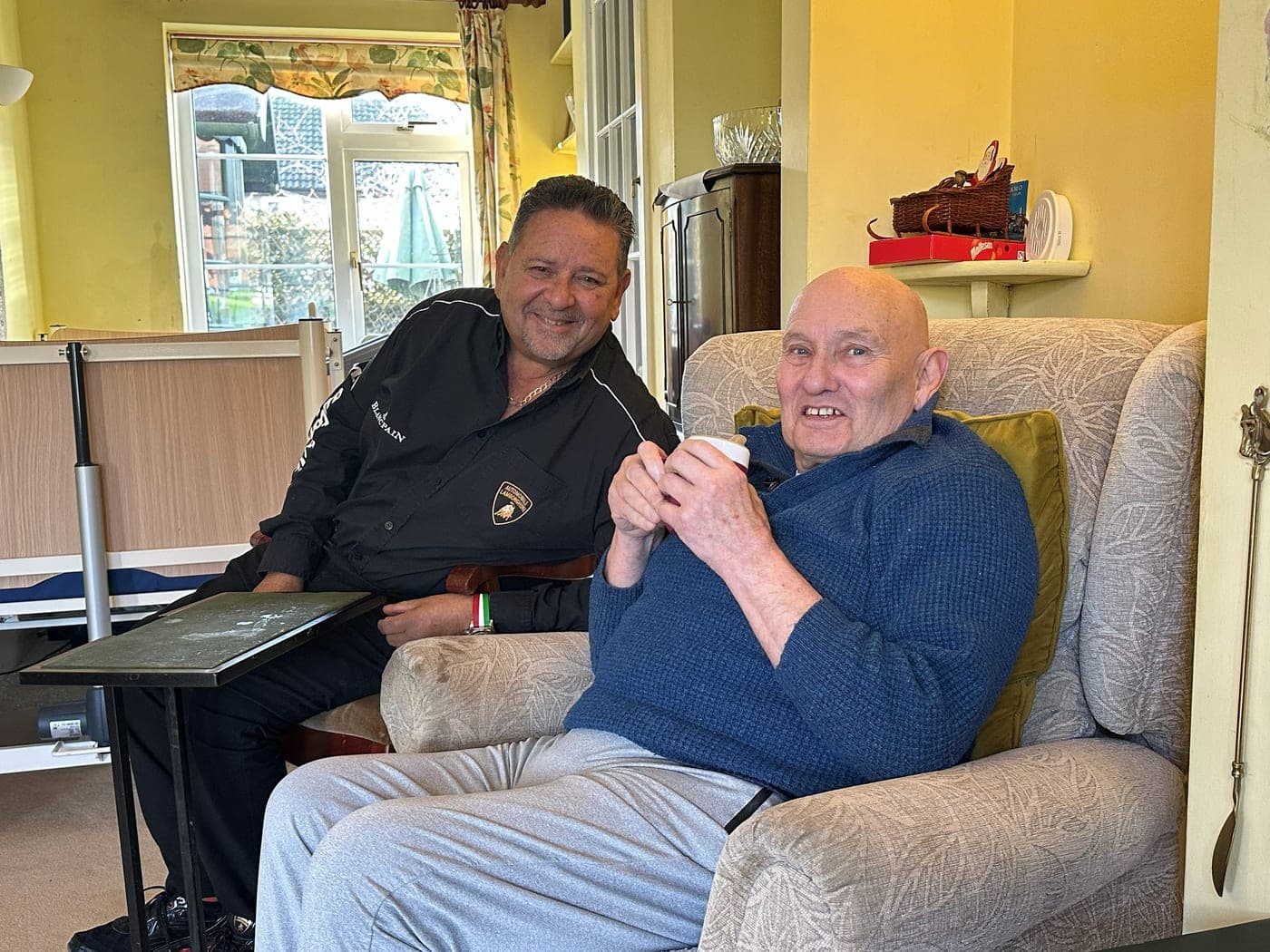
One family member has said to me many times that their live-in carer has saved the life of their loved one, just by being there. The client was on palliative care to start with, but is now very much fighting fit and happy.
If you are thinking about live-in care
Please call us for an initial conversation to go through your needs, wants and expectations. You can reach the live-in care team on 01722 327319, or email liveincare@spirehomecare.co.uk.
Following that initial conversation, we will come and meet the family and client and carry out an initial needs assessment. Once this is complete, I will find a couple of carers who I believe would be a good fit and send the client and family their carer profiles. Once they are happy with the choices, I will get the ball rolling with building the care plan for the carers, and arrange a start date and time with the client and family.
If you are struggling to decide, speak with each other and write out a pros and cons list, along with your concerns around the idea of care, whether that is live-in care or a care home. Once this is in place, please call, and we would be happy to meet for a coffee and a chat to answer any questions or worries you may have.
Last reviewed by Natalie Morgan, Live In Care.